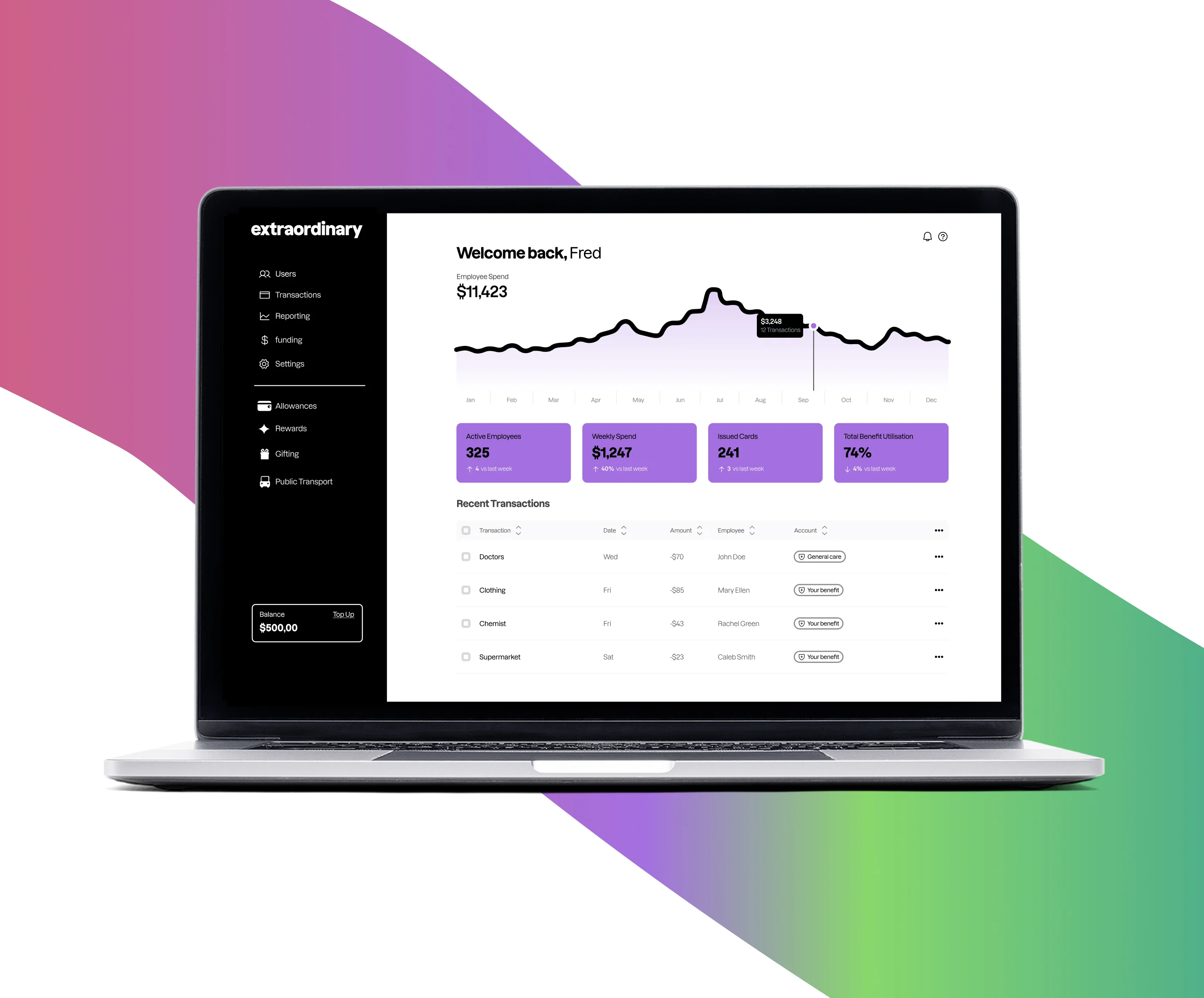

.webp)


How NZ Employers Are Cutting Commuting Costs

How New Zealand Employers Are Cutting Employee Commuting Costs with Salary Sacrifice
5 min read
The cost of living is squeezing everyone right now. Fuel prices are up, public transport costs keep climbing, and for a lot of Kiwi workers, the daily commute has become one of the most frustrating recurring costs they face. It shows up week after week and for most employees, it has felt like something they just have to absorb.
But that's changing.
We recently hosted a webinar with the team at Workride and special guest Felicity Cammock from Air New Zealand to walk through the Inland Revenue product rulings that allow for the salary sacrifice schemes that let New Zealand employees pay for their commute using pre-tax income, saving them real money for a fraction of the cost of a pay rise.
Here's everything that was covered.
What Is an Employee Commuter Benefit in New Zealand?
Attracting and retaining good people is harder than it has ever been. Salaries are under pressure, budgets are tight, and employees are increasingly looking to their employers for meaningful support, not just a ping pong table or a fruit bowl.
Commuting is one of those areas where employers can actually make a tangible difference. It's a cost your people feel every single week. And unlike a lot of traditional benefits, a commuter benefit shows up directly in people's payslips and their daily routine, which means employees actually notice it.
The challenge has always been how do you offer something meaningful without increasing your overall benefit spend? That's exactly what Extraordinary and Workride have solved.
Tax-Free Public Transport: New Zealand's Only Salary Sacrifice Scheme with Inland Revenue binding ruling.
About a year ago, Extraordinary secured a binding ruling from Inland Revenue, the only one of its kind in New Zealand, that allows employees to fund their public transport costs using pre-tax income through a salary sacrifice arrangement.
In plain terms: an employee agrees to reduce their gross salary by the amount they spend on public transport each week. That amount is loaded onto their Extraordinary card each pay cycle, ready to tap on any bus, train, or ferry across New Zealand. Instead of paying for their commute out of their after-tax take-home pay, they're paying for it before tax is applied.
The savings are significant. Take someone earning $80,000 a year who spends $50 a week on public transport. By entering the scheme, their take-home pay drops by around $31.53 a week but they receive $50 to spend on their commute. That's a real saving of over $18 a week, or more than $900 a year. The equivalent of a small family's monthly food shop, back in their pocket every year, just from changing how they pay for something they were already doing.
Use our public transport savings calculator to see exactly what your team could save.
What Does a Salary Sacrifice Scheme Cost the Employer?
Extraordinary's public transport benefit costs $4.17 per active employee per month plus 5% of the value loaded. Paid by the employer, on top of what employees load. Never taken from their pay. For most New Zealand organisations, that's a fraction of the cost of giving the same take-home boost through a pay rise.
Salary Sacrifice for Bikes: How Workride Works
Alongside the pre-tax public transport benefit, Workride co-founder Aidan Smith walked through New Zealand's salary sacrifice programme for bikes, e-bikes, and scooters.
Workride's story started in 2022, when Aidan and his co-founder began advocating for tax legislation changes that would remove fringe benefit tax on work-related cycling. After presenting at Parliament and working with advocacy groups and ministers, those changes came through in 2023. Workride was founded to make that benefit accessible and straightforward for every New Zealand employer.
Today, Workride works with close to 2,000 organisations and has 98% of New Zealand bike shops in their network.
The savings for employees are meaningful. On the Workride Max programme, a $5,200 bike ends up costing the employee closer to $3,200, a saving of around $2,000. Even on Workride Plus, the fully funded programme designed for government and large organisations with no upfront exposure, employees are still saving between 25 and 35 percent on the cost of their bike.
The process is fully digital. Employees sign up online, visit any participating bike shop, and the salary sacrifice is implemented through payroll, with Workride managing the whole process from start to finish.
Case Study: How Air New Zealand Rolled Out Both Benefits
The highlight of the session was hearing directly from Felicity Cammock, Senior People Specialist at Air New Zealand, who shared a candid look at how one of New Zealand's largest employers implemented both the Extraordinary public transport benefit and Workride across a workforce of 12,000 plus.
About twelve months ago, Air New Zealand asked employees to return to the office four days a week. It was a significant shift, and the leadership team knew they needed to back it with genuine support for commuting costs.
"We wanted something that our employees would notice and value. Not just a benefit that looked good on paper, but something that actually changed something for them in their day-to-day lives."
They had a clear brief: practical, nationwide, no significant increase to the benefit budget, and something employees would actually engage with. Extraordinary and Workride ticked every box.
Implementation started with a business case in June 2025, approved by the executive team quickly. Air New Zealand built their application process directly into Workday, integrating it with their payroll system so there were no manual applications for the HR or payroll team to handle. They ran pilots first, then in-person activations through September to November, with both Extraordinary and Workride involved throughout.
"We didn't feel like we were carrying the whole implementation burden on our own. Both providers have been super supportive and flexible right from the start."
The Results
11% of Air New Zealand's corporate employee population is now on the Extraordinary pre-tax public transport scheme, with an average annual saving of $650 per person. 700 employees have signed up to Workride, saving an average of $1,700 on the cost of their bike.
Felicity's advice for other New Zealand organisations considering salary sacrifice benefits came down to four things: make the benefit address a real cost employees feel every week, keep the process simple and self-service, bring it to life with activations and real employee stories, and make access as seamless as possible.
"If you make a benefit really practical, accessible, and relevant to daily life, employees will engage. That's definitely what we're seeing."
Why More New Zealand Businesses Are Choosing Pre-Tax Commuter Benefits
Employees are already spending money on their commute. These salary sacrifice schemes simply change how they pay for it, using pre-tax income instead of after-tax dollars. The saving is real, it's recurring, and it shows up in their payslip every fortnight.
For HR teams, it's a benefit that's genuinely easy to talk about. For finance teams, it's a fraction of the cost of a pay rise.
With companies like Air New Zealand, Spark, 2degrees, Deloitte, and PwC already running Extraordinary, and close to 2,000 organisations on Workride, the momentum is clearly building across New Zealand.
If you're thinking about how to better support your team's commute or looking for a meaningful employee benefit that doesn't blow the budget, this is worth a look.
Watch the full webinar recording above, or book a demo to see how Extraordinary's salary sacrifice scheme could work for your organisation.
Related Resources

FBT on Christmas gifts
Gifting meets FBT. The integration you need.