
.webp)


Save your Wellington staff 30%+ on public transport
$900+ a year back in their pocket. Inland Revenue has issued a product ruling.

















How it works
Four steps from kick-off to your team's first pre-tax commute.

Talk to us
Walk through eligibility, payroll setup, and rollout in one short call.
Payroll integration
Integrates with your payroll software, typically live within a fortnight.
Employees opt in
Employees choose their pre-tax amount and funds go to their Extraordinary account, locked for public transport.

Pre-tax pay savings
Fares come out before tax, savings show up in every payslip, automatically.
Tax-free transport, made simple.
With our binding ruling from Inland Revenue, companies can now help employees save on public transport.
Employees can now use pre-tax income to pay for public transport.
Saving the average employee $900+ annually on commuting costs.
There is no reason your company shouldn't offer this to you.
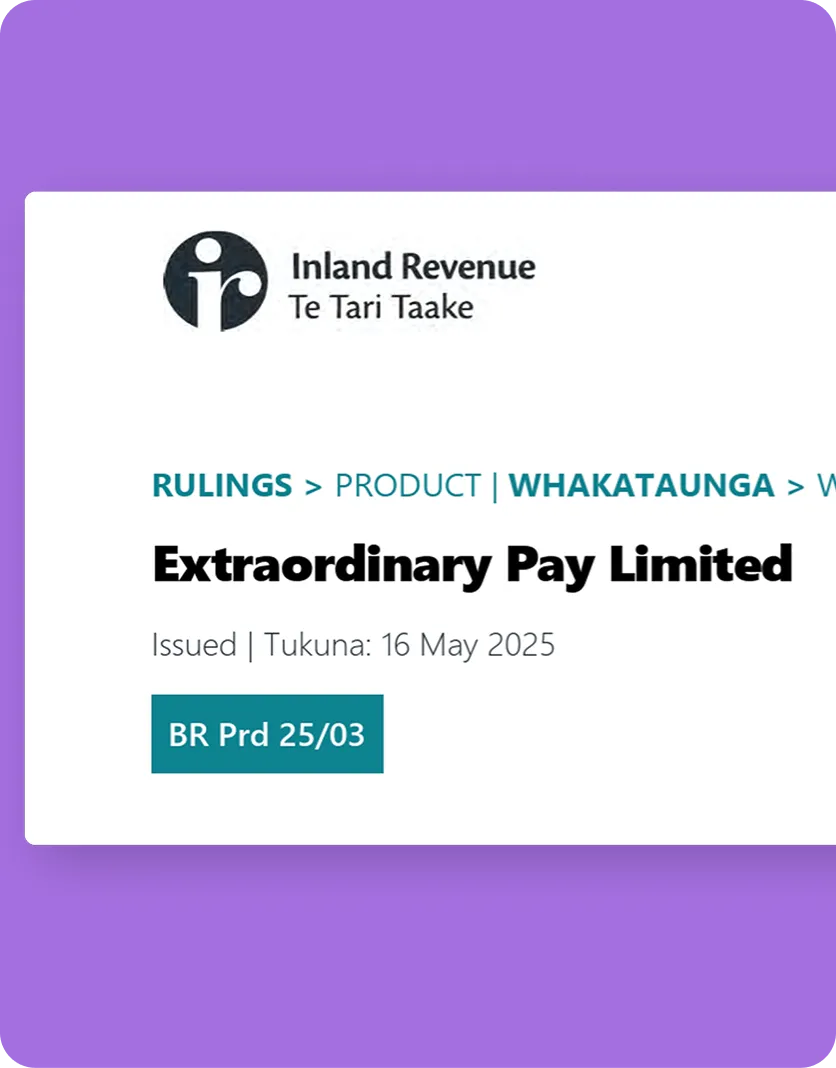
FBT exempt
Built-in controls and automated reporting.
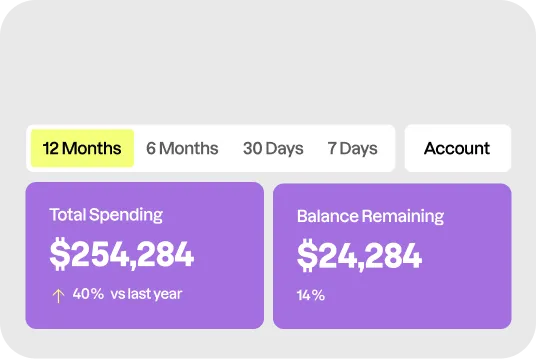
Benefits
Offer a high-value perk using the pre-tax income of the employee to fund there journey to work.
Return-to-office made easy
Make commuting more affordable and appealing, pre-tax transport funds that load instantly into employees’ accounts, locked to public transport.
Sustainability
Reduce commuter emissions, more people using public transport.
Saving 30%+
Access real savings on commuting costs.
Nationwide
AT HOP, Snapper, Metrocard, Bee Card and NTS once launched*.


"Introducing Extraordinary's Public Transport module across our team was a no-brainer for us. The team love the ability to save on their daily commute, and it's a simple, yet effective initiative that genuinely makes a difference."

THE MATH
See what your employees could save
Eastbourne → Queens Wharf
Daily commuter · Adult 10-trip · East by West $110.30/week
$2,050.12
annual pre-tax saving
Karori → CBD
Daily commuter · 3 zones · Snapper $46.70/week
$900.87
annual pre-tax saving
Upper Hutt → CBD
Daily commuter · 7 zones · Snapper $92.30/week
$1,724.86
annual pre-tax saving
Based on current Adult Snapper peak fares (Metlink, in effect since 15 May 2026), calculated over a 52-week year at 5 days/week. Assumes an $80,000 gross income and tracks standard New Zealand PAYE and ACC tax brackets. Indicative only — actual savings vary by individual circumstances.
Run the numbers for yourself
See how much your employees could save each year with pre-tax public transport benefits through the Extraordinary platform.
For guidance only. Actual savings vary based on income, KiwiSaver rate and other entitlements. Based on a Deloitte-prepared tax model.
See Extraordinary in action.
Get a personalised walkthrough of how each benefit module can fit your business, your budgets, and your people.
Book a demo
Pricing FAQ
Our APIs connect directly into your systems, simplifying workflows for HR and finance.
Yes. Inland Revenue confirmed it in Product Ruling BR Prd 25/03, issued in 2025. The ruling is supported by section CX 19C of the Income Tax Act 2007, which provides an FBT exemption for public transport used for commuting. Extraordinary is the platform built specifically to deliver this benefit in line with the ruling.
$4.17 per active employee per month plus 5% of the value loaded.
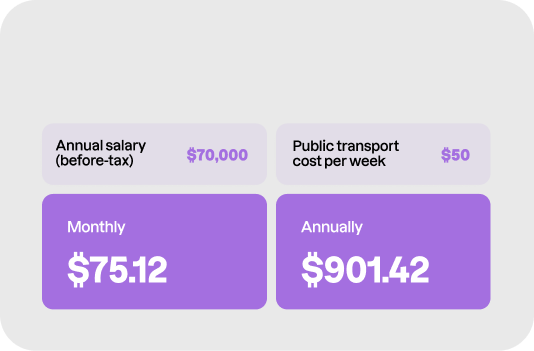
Around 30% per trip, up to $900+ per year. Per the Deloitte tax model, an employee on $80k spending $50/week on public transport saves over $900 annually. An employee on $70k spending the same saves $768+. Real take-home savings sit at roughly $18 a week after the salary reduction is accounted for.
Salary sacrifice reduces the employee's base salary for all purposes, including PAYE and KiwiSaver employer contributions. The arrangement must be agreed in advance, must represent a genuine reduction in salary, and must operate prospectively, not retrospectively. Employees can model the net effect using the Extraordinary savings calculator. Employers should seek their own tax advice on individual cases.
FBT applies at the point the card is used to acquire public transport, not at the point of funding. Employers only pay FBT on what employees actually spend. This is a structural difference from traditional gift cards, where FBT triggers on receipt. It also means unspent allocations carry no FBT cost.
Yes. The Extraordinary Card works with Metlink trains, buses, and ferries across the Wellington region. It will support Motu Move, the upcoming National Ticketing Solution, when it launches. Employees tap the card or use Apple Pay or Google Pay at the reader.